Louisiana Intermodal Drayage Dispatch
In the freight world, "The Big Easy" is the biggest lie ever told. There is absolutely nothing easy about pulling an 80,000-pound intermodal box through Louisiana. New Orleans isn't just a standard port city; it’s a massive geographical choke point where the Gulf of Mexico, the mighty Mississippi River, and all six North American Class I railroads violently collide in the middle of a sinking swamp.

Every mile you log in the Pelican State is a direct threat to your equipment and your profit margins. You are fighting 100-percent humidity, suspension-busting potholes, and ancient infrastructure that wasn't built for 80,000-pound rigs. If you don't know your river crossings, bridge heights, and the right ways to navigate the heavy industrial canals, NOLA will eat your clock and tear your truck to pieces.
The Louisiana Riverfront Heavyweights and the Swamp Rail Hubs
Unlike other states that spread their freight out, Louisiana forces everyone into the NOLA bowl. You are either dragging heavy ocean boxes right off the Mississippi River or navigating the tangled web of rail yards spread across the Eastbank and the Westbank.
Zone A: The Riverfront (Ocean Ports)
The ocean freight here is heavily tied to the river, meaning you are bumping docks right in the middle of historic, tightly packed neighborhoods.
The undisputed container heavyweight is the New Orleans Terminal (NOT) (50 Napoleon Ave, New Orleans, LA 70115), sitting right at the Napoleon Avenue Container Terminal complex. Pulling a box out of here is an absolute grind. You are instantly dropped onto city streets, fighting local traffic and massive potholes just to get up to Claiborne Avenue and onto I-10.
The overarching operations and management for the river traffic fall under the Port of New Orleans (1350 Port of New Orleans Place, New Orleans, LA), which oversees everything from breakbulk to heavy agricultural lifts along the riverfront.
Zone B: The NOLA Rail Hubs (Eastbank & Westbank)
Because New Orleans connects the eastern and western rail networks, the rail yards here are massively busy, but they are scattered across different sides of the river and the industrial canals.
If you are pulling for the western rails on the Westbank, you are heading to UP - Avondale (100 Avondale Garden Road, Avondale, LA 70094). Getting here requires crossing the Mississippi River, which is a major logistical hurdle during rush hour.
Upriver on the Eastbank, the Canadian National rail connects at CN - New Orleans (2351 Hickory Avenue, Harahan, LA 70123). This drops you into the Elmwood/Harahan industrial corridor, which is truck-heavy but flows much better than the inner city.
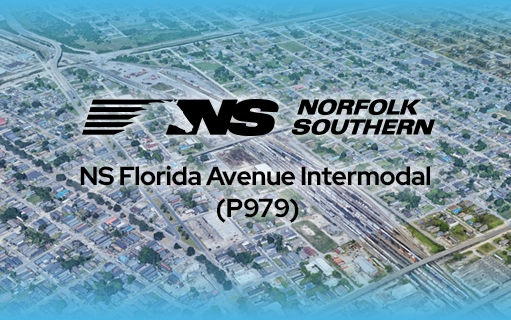
Over on the east side of the city, you have to cross the Industrial Canal to hit the eastern rail anchors. CSX - Gentilly (7801 Almonaster Ave, New Orleans, LA 70126) sits deep in the gritty, heavy-industrial sector of NOLA East. Right on the edge of the canal is NS - Florida Avenue (2900 Florida Avenue, New Orleans, LA 70117). Navigating to these yards means relying on old drawbridges that can stop your truck dead in its tracks for marine traffic
Conquering the Canals, the River, and the Concrete Craters
New Orleans operates at its own speed. You cannot dispatch this city using standard highway math.
The River Crossing Trap
The Mississippi River cuts right through your freight lanes. If you are pulling out of Avondale (Westbank) and need to get to the Eastbank, you are relying on the Huey P. Long Bridge or the Crescent City Connection. The Huey P. Long is famously narrow and terrifying in high winds, and the Crescent City Connection gets bogged down with brutal commuter traffic. Always factor bridge delays into your appointment times.
The Almonaster & Florida Ave Drawbridges
If you are running to CSX Gentilly or NS Florida Avenue, you are crossing the Industrial Canal. These are active marine waterways with ancient drawbridges. If a barge or a ship is coming through, the bridge goes up, and you are sitting on the asphalt burning fuel for 45 minutes with absolutely no detour available. Keep your CB on to listen for bridge closures.
The Uptown Suspension Killer
New Orleans has some of the worst roads of any major port city. Pulling a heavy 40-footer out of the Napoleon Ave terminal means your suspension is going to take an absolute beating. Secure your freight, watch out for unmarked low-hanging oak tree branches in the Uptown grid, and dodge the craters. A blown steer tire on Claiborne Avenue will wipe out your profit for the whole week.
Earning Your Miles in the Crescent City
The Louisiana intermodal market is a heavy-duty, blue-collar grind. You are navigating one of the oldest and most complex port environments in the country. Between the river bottlenecks, the canal drawbridges, and the tight urban street routing, New Orleans demands total situational awareness from the driver's seat.
If you respect the river crossings, map out your drawbridge routes, and drive to protect your equipment from the brutal road conditions, NOLA provides a massive, constant flow of high-paying freight connecting the Gulf Coast to the rest of the continent.
-Thumbnail.webp)